
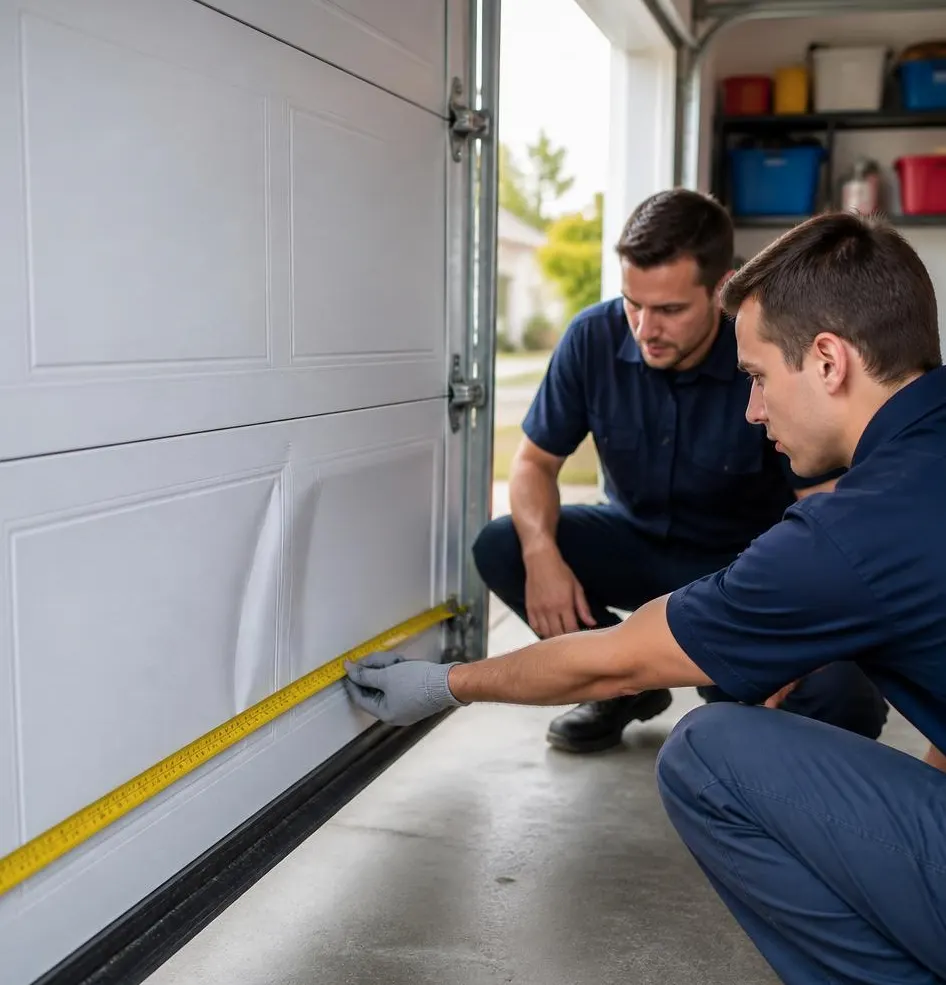
The Morning You Can't Get the Door Up
It's a chilly November morning, the kind where you actually need a jacket to grab the paper. You hit the opener button and—nothing, or worse, the door creeps up an inch, groans, and stalls. Maybe you hear the motor straining while the door itself doesn't move at all. You go check the bottom of the door and the rubber seal looks like it's glued to the concrete.
Port Charlotte doesn't see hard freezes often, but when a cold front does push through and temperatures drop into the 30s overnight, combined with the heavy humidity this area holds onto, you can end up with a garage door that acts frozen even without snow or ice anywhere in sight. Here's what a technician actually checks, in the order they'd check it.
What You're Noticing
- The door won't lift at all when you press the opener, and the motor hums or clicks without movement
- The door moves a few inches, then stops hard
- You hear a grinding or scraping sound along the tracks
- The bottom weatherstripping looks stuck flat against the garage floor
- The door feels heavier than usual, or the opener seems to be working harder than normal
Any of these is worth pausing on before you force the opener to keep trying — repeated attempts can burn out the motor or snap a cable that's already under strain.
Working Through the Causes, in the Order a Technician Checks Them
1. Weatherstripping Stuck to the Slab
This is the first thing to rule out because it's the easiest to confirm. Overnight humidity condenses on the garage floor and on the rubber seal at the bottom of the door. If temperatures drop enough, that moisture can tack the seal to the concrete, especially on floors that sit low or don't drain well. The fix is simple: gently pry the seal free along its length with a flat tool before running the opener, rather than letting the motor yank it loose. If this keeps happening, a bead of silicone-based lubricant on the seal helps it release cleanly next time.
2. Rust or Corrosion in the Tracks and Rollers
Next, a technician runs a hand along the tracks and checks the rollers. Salt air near the coast and the area's constant humidity swings are hard on bare metal. Small surface rust on tracks or roller bearings doesn't show up as a problem most of the year, but it adds friction that becomes obvious the moment a cold, damp morning stiffens everything up further. The fix is cleaning the tracks with a dry cloth, removing surface rust with a wire brush where needed, and lubricating rollers and hinges with a garage-door-specific lubricant — not WD-40, which washes away and attracts grit.
3. Swollen Door Panels
If the door is wood or a wood-composite, moisture absorption over the humid months can cause panels to swell slightly. That swelling is usually minor, but on a cold, damp morning it's enough to make the door bind in the tracks where it slid freely before. A technician checks for drag marks or paint scuffing inside the track edges as evidence. The fix ranges from adjusting the track spacing slightly to, in persistent cases, resealing or repainting the door to slow future moisture absorption.
4. Spring Tension Affected by Temperature
Metal contracts slightly in the cold, and torsion springs are no exception. A spring that's already a little worn or under-tensioned can feel noticeably tighter or less cooperative on a cold morning, making the door seem heavier than usual. This is where a technician checks spring balance by disconnecting the opener and testing the door manually. If the spring is near the end of its life, this is often the moment it reveals itself — cold weather doesn't cause spring failure, but it can expose a spring that was already close to breaking.
5. Opener Force Settings and Limit Switches
Last on the list, because it's the least likely culprit but still worth checking: the opener's force and limit settings. If everything mechanical checks out but the door still struggles, a slightly miscalibrated opener may be reading the extra resistance from a stiff track or tight spring as an obstruction and stopping early. Recalibrating the force settings resolves this once the actual mechanical cause has been fixed.
When to Call Precision Garage Door of Port Charlotte
If prying the weatherstripping loose doesn't solve it, or the door still fights you after that first check, it's time to call in a technician rather than keep testing the opener's limits. Precision Garage Door of Port Charlotte handles this kind of diagnostic work regularly, from Garage Door Tune-Up & Maintenance that cleans and lubricates tracks and rollers before rust becomes a recurring issue, to Garage Door Spring Repair when a cold morning exposes a spring that's already near failure. We check the causes in the right order so you're not paying to replace parts that were never the problem.
If your garage door in Port Charlotte, Punta Gorda, North Port, or anywhere around Charlotte Harbor is sticking, grinding, or refusing to budge this season, call Precision Garage Door of Port Charlotte and we'll have a technician out to sort it quickly.